
Before he came to Tanium, Mike Torrence worked with U.S. Navy SEAL teams—and didn’t have much down time.
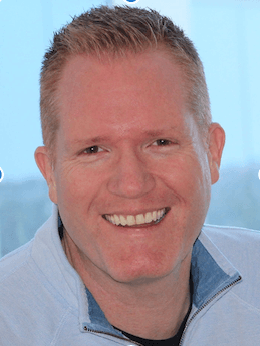
As an electronics technician third class, or ET3, he kept busy troubleshooting and repairing high- and ultra-high-frequency communications systems, handheld transceivers, and radar systems used by SEAL team platoons stationed at the Naval Amphibious Base Coronado outside San Diego.
“There's a saying in the military: ‘[If] you have time to lean, you have time to clean,’” recalls Torrence (pictured here), now an associate technical support engineer at Tanium. “So basically, you're not taking time off—you go ask if there's something you can do to help other teams.”
That sense of urgency, teamwork, and dedication to a goal—values drilled into soldiers from their first days in boot camp, and vital to the field of cybersecurity—is what distinguishes many veterans from other job seekers when they leave the military and look for work in the private and public sector. But getting employers to recognize that can be tough.
That’s just one of several challenging issues discussed in a recent episode of Tanium Podcast, hosted by Chelsea Nelson, that explores cybersecurity’s (ever-widening) skills gap and the untapped pipelines of talent that can help alleviate the problem. The episode features Nelson Abbott, of NPower, a national nonprofit that offers free tech training and certifications to individuals from military-connected families, underserved communities, and underrepresented demographic groups—plus Torrence and Chris Roberson (pictured below), both veterans, NPower grads, and new hires at Tanium.
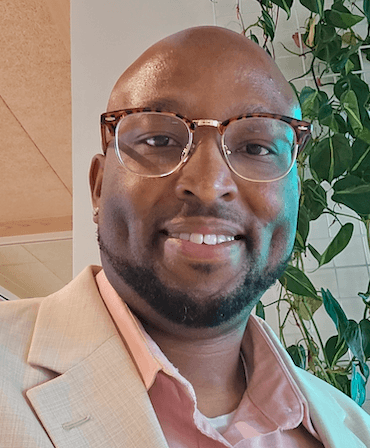
One of the biggest obstacles for vets is translating the work they've done in the military into private sector terms that hiring managers understand, Nelson explained in the episode. “[It’s] the classic problem of, I was managing a million dollars’ worth of budgets or equipment in the military, and now I can't even get a job slinging hash at McDonald's.”
NPower’s goal is to prep veterans, veterans’ spouses, and others for their job search and bolster resumes with cyber certifications (like CompTIA Security+) and on-the-job training (securing internships for some participants with companies like Tanium).
“It's a great way to get experience, knowledge, and possible internship and job offers afterwards,” said Roberson, who knows this first-hand. He interned at Tanium this summer and joined the team full-time last month.
Listen to the episode here
HOST: Chelsea Nelson, Marketing Program Manager, Tanium GUEST: Nelson Abbott, Senior Director of Advanced Program Operations, NPower GUEST: Mike Torrence, NPower graduate and Associate Technical Support Engineer, Tanium GUEST: Chris Roberson, NPower graduate and Associate Technical Support Engineer, Tanium
Show notes
For more info on NPower, diversified security teams, and the ways Autonomous Endpoint Management (AEM) can enhance network visibility and address the widening skills gap, check out the following links on Tanium’s blog and on Focal Point, Tanium’s award-winning online cyber news magazine.
- SURVEY SAYS: New research on the IT operations and security skills gap uncovers surprising data on network visibility | Tanium
- DEEP DIVE: Read the full report on the growing role of AI in endpoint management and security convergence | Tanium
- WATCH: Why Autonomous Endpoint Management (AEM) is gaining traction and alleviating the skills gap—an on-demand webinar with Tanium’s Erik Gaston and Enterprise Strategy Group’s Gabe Knuth | Tanium
- APPLY: SkillBridge offers free cyber training for service members nationwide or overseas | NPower
- WHY GIVE: Your investment can make extraordinary things happen | NPower
- SKILLS GAP SCAM: Hiring remote IT workers? Beware the deepfake frauds | Focal Point
- BETTER HIRING TIP SHEET: An ISACA survey reveals why HR and enterprise leaders need to get real about what “entry level” really means | Focal Point
- GET CREATIVE: To bridge the skills gap, executives need to look to career-switchers and other unexpected sources of talent | Focal Point
Transcript
The following interview has been edited for clarity.
Chelsea Nelson (TANIUM): Hello, I'm Chelsea Nelson, and welcome to the Tanium Podcast, where we cover the latest tech solutions from Tanium, the global innovator in cybersecurity.
Anyone working in the tech sector knows that the cyber skills gap remains a huge problem for enterprises. There's a shortage of more than 4 million cyber professionals across the globe, according to the World Economic Forum, and only 14% of organizations are confident they have the people and skills required to meet their cyber needs.
To fill that gap and scale opportunities, C-suite executives and security leaders need to explore previously untapped pipelines of talent. But how and where do they look?
“When the folks at Tanium came to us last year, and were like, hey, we're finally ready to bring on some interns, I was like, oh my god, you know, just so excited that you folks have had that opportunity to work there, and that y'all are making the most of it.”Nelson Abbott, Senior Director of Advanced Program Operations, NPower
Nelson Abbott (NPower): When the folks at Tanium came to us last year, and were like, hey, we're finally ready to bring on some interns, I was like, oh my god, you know, just so excited that you folks have had that opportunity to work there, and that y'all are making the most of it.
Chris Roberson (Tanium): We do our best to represent, and so they can continue to bring on NPower students. Because it is an awesome company.
TANIUM: Joining us today is Nelson Abbott, Senior Director of Advanced Program Operations at NPower. That's the letter N—as in now—power. Npower.org is a national nonprofit that provides free tech training and career development for young adults, women, and military-connected families. We've also got two NPower success stories here, Mike Torrence and Chris Roberson, who both served in the military, trained with NPower, and now work full-time at Tanium.
All right. Nelson, Mike, Chris, thank you so much for talking with us today. I'm really excited about this conversation because I love it when the nonprofit sector and enterprise companies come together for the greater good. It makes me really happy, so I'm really excited to have this conversation.
And I think today, to kick it off, I'd love to start with you, Nelson, to talk a little bit about what NPower is. We know it was founded in 2000, and since then, it's grown exponentially, which is good, because we also know so has the technology skills gap.
So I’d love to hear from you a little bit about why you think this problem is still facing the tech industry today. Everyone seems like they're trying to solve it. You know, why are you still so busy?
Abbott: Sure, so, a lot of reasons here. It can be bad job descriptions, it can be outdated expectations of candidates. Unwillingness to do on-the-job training. Then the kind of larger issue: Baby boomers are retiring, and the Baby Boomers are a much larger, numbers-wise, population than the younger folks that are coming in. So it's, you know, kind of this compound problem.
In terms of, you know, certain expectations, we still run into the challenges of companies still requiring degrees or years of experience, which is understandable if you have someone that has five, 10 years of experience, and they're either retiring or moving to a different company. [Employers] may want someone that has that same level of experience in order to kind of come in and hit the ground running. But that's not always reasonable, depending on what the talent pool is like in your region. So, and then technology is always changing, right? And if people don't keep up, they'll get left behind, and then there'll be that, you know, there'll be empty spaces that need to be filled, and it's always kind of going on and growing and changing. I mean, AI in the last 18 months, two years, is a great example of that.
TANIUM: It's seems like the problem is always changing and we’re always chasing it. Okay, well, we've got two veterans sitting with us, Mike and Chris, so let's talk a little bit about the military. First off, it's not just veterans you serve, you also serve veterans' spouses, correct?
Abbott: Correct, yes, we do.
TANIUM: So what challenges, for those coming from the military world, what kind of things are they facing as they transition into the private sector?
Abbott: I'll start off with my, you know, from the NPower side, but I'll turn it over to our two experts here on the call. But I'd say the biggest thing is just translating the work that they've done in the military into private sector terms. I'm always learning new acronyms from my colleagues here at NPower that come from the military. You know, the classic problem of, I was managing a million dollars’ worth of budgets or equipment in the military, and now I can't even get a job slinging hash at McDonald's. So, that's probably the evergreen challenge, but I'll turn it over to Chris and Mike for some more specific examples.
TANIUM: Well, yeah, Mike, I'd love to bring you in on this, because you are now an associate technical support engineer here at Tanium. But before that, you served in the Navy as an Electronics Technician Third Class, or ET3, stationed with SEAL teams at the Naval Amphibious Base Coronado, near San Diego, correct?
Mike Torrence (Tanium): That is correct.
TANIUM: Awesome. How much of what Nelson described resonates with you? Like, what's your experience shifting into the private sector?
“Here's maybe what's unfair… but here's how you can work with that and get yourself a fair opportunity, even if you maybe don't have a degree.”Torrence
Torrence: I think he's spot on, and I think a lot—if I might dare say a majority—of enlisted people don't have a degree. So when you come out, that is the challenge. Because some of the… some of the industry might be kind of hard and stringent upon, you know—you have to have that degree. But I think in some areas, especially the ones that NPower tackles, certifications can help bridge that gap. So, there's not just the knowledge, not just the certifications—I feel like they do a great job of preparing you for what it might look like on the job practically, but then also making sure we have dedicated time for professional development. So I feel like they do a great job of helping you transition and understand, like Nelson said, how to translate that military experience to the civilian world. Also, you know, hey, here's maybe what's unfair, or fair, but here's how you can work with that and get yourself a fair opportunity, even if you maybe don't have a degree.
TANIUM: Yeah, that makes a lot of sense. So a lot of it's, like, translating the different language from one sector to the other to make sure you're kind of filling in the skills gaps there. Chris, what about you?
Roberson: Yes, like Nelson was saying, some people come in from the military world to the civilian life, budgeting millions and billions of dollars of inventory in the military and don't know how to translate that into the civilian world. That's not my issue, right? And I wasn't as illustrious as Mr. Mike here, working with the SEALs and things of that nature. [They laugh.]
TANIUM: Well, so let's talk about your background a little bit. So, you were serving as a dental technician in Gulfport, Mississippi, right? And then at the Roosevelt Roads Naval Station in Puerto Rico. By the way, I hear that you interned at Tanium and then were just hired full-time as an associate technical support engineer? Well, congrats!
Roberson: Thank you, thank you, thank you. So, yes, I guess my major issue, being a family man, coming out of the military as a dental tech—which in the civilian world is a dental assistant—you know, I did some hygienist work and things of that nature, but you need to have a degree in that field to be a hygienist. So those skills don't really translate to the civilian world. You know, it's a little bit more free-flowing in the military, versus in the civilian life, you have to have these certain things lined up, backing you, as far as degrees and certifications.
“As a dental assistant, you're not really making that much money coming out. And if you have a family, that's tough. So I had to pivot and find something that was more sustainable, which is why I turned to IT.”Roberson
Well, as a dental assistant, you're not really making that much money coming out. And if you have a family, that's tough. So I had to pivot and find something that was more sustainable, which is why I turned to IT. So, you know, those are some of the other issues from the other side that I personally experienced. The pay wasn't equating to the lifestyle that I had to live.
TANIUM: Yeah, that translation wasn't making it.
Roberson: Fifteen dollars an hour is not working.
TANIUM: Yeah, I get it, that makes so much sense. So, both of you, for Mike and Chris—and maybe, Mike, we can start with you—talk to me a little bit about how you heard about NPower in the first place or how you came to be connected.
Torrence: So out of the military, I went back to school, got a degree. I started working in telecom for quite a while, and I unfortunately was caught up in part of a reduction in force. And so, when I started going to career fairs, especially those maybe a little more targeting veterans, I came across NPower and was, steered in the direction of the different courses, different opportunities they offered. And I went and interviewed with them and was fortunate, back in 2019, to go through the coding and web development course they had. And then I kind of bookmarked it—I did a few different things over a few years, and then I really decided I wanted to come back into the technical field. And my main goal was to get into cybersecurity, which, I was fortunate. I got to.
TANIUM: Yes, welcome to Tanium.
Torrence: Yeah, thank you.
TANIUM: Chris, what about you? How did you end up connecting with NPower?
Roberson: So like I advised, I had to make a pivot financially, and I was inspired by some commercials on the radio, on sports radio. I was hearing about another computer learning program, schooling, I guess you want to call it. So, I was like, hmm, let me take a look at that. So I went and just simply Googled “military computer programs,” and NPower popped up in Dallas. This was back in, like, 2015, so I've been with NPower for a while.
TANIUM: It looks like the Google search was really working for you guys. [They laugh.]
Roberson: It was worth it.
TANIUM: Nelson, tell me, what do workers like Mike and Chris bring to the tech industry that sets them apart? Or what skills or mindset makes them especially well-suited for cybersecurity?
Abbott: Yeah, sure, and this is… a lot of what I'm going to tell you is feedback we've gotten from employer partners over the years. You know, creativity, dedication, like, an open mind, a hunger for knowledge, which, as we talked about at the top of the show, technology's always changing, there's always something new to learn. So that willingness to be open and coachable and teachable.
And another one of our partners also talked about, you know, hey, they've hired students from all of our programs that we've done, so the foundational programs that both Chris and Mike mentioned, but then our advanced program, “Cyber” and “Cloud,” as well. And they said, “I don't put college graduates on my test projects, where we're testing out a new product in a sandbox environment.” He's like, “I put my NPower students on that,” because that's what they bring to the table, this eye for creativity, critical thinking, problem solving that we don't see in a lot of other traditional talent pipelines.
And then in the case of Chris and Mike, you know, obviously they're coming from different areas in the military, but a lot of our military folks bring a lot of leadership experience, depending on how they served in whichever branch that they were in. And they can say, hey, I managed the squad, and coached my team and my troops through different scenarios, and bring that additional layer of leadership experience as well.
“Technology's always changing, there's always something new to learn. So [IT leaders look for] that willingness to be open and coachable and teachable.”Abbott
TANIUM: It seems like there's a sense of confidence that you're speaking to, too, that people come through with the experience that they have that maybe a brand new engineer might not have, which I think is pretty cool.
Abbott: Yes and no. Everyone suffers from impostor syndrome, you know?
TANIUM: Oh, yes, for sure.
Abbott: And so we spend a lot of time coaching our students through that, especially, career transitioners like Chris, where they're maybe not coming from a traditional tech background. And so it's just, you know, we do a lot of work in that area. Just like, “Hey, you can do it, you know, just get your foot in the door, do the best you can, be honest about what your limitations are, but be open,” you know, like we said, “be open to opportunities and being coached and taught new things.”
TANIUM: Yeah, I love that. Mike and Chris, talk to me a little bit about what lessons you learned in the military that have proved valuable in the world of cybersecurity.
Roberson: As Nelson was just speaking on, as far as not having all the technical background and knowledge that some others might have coming out of college, it's a… there's a gap there, you know? But I feel like my ability to communicate with all levels of management, my ability to be able to…. You know, as far as IT, the stigma is kind of true: People don't like to really talk, people are kind of more reclusive. Well, I'm more outgoing, I'm very vocal, and I speak to everybody. And I think, based off of that, I can say that was a big part of my hiring here at Tanium. [He laughs.]
TANIUM: You did real well.
Roberson: Because the impostor syndrome does set in after a while, and you're like, “Oh my god, what did I get myself into?” But, you know, the fact that I have built those relationships and established that base with… especially upper management, I have the slack, or the ability, the time to catch up and put forth the effort, because they're willing to work with me. So I do appreciate that.
TANIUM: Yeah, I love that. Mike, what about you?
Torrence: I think one of the biggest things I see is teamwork, and dedication to a goal, and a sense of urgency. I had my own communications team I was a part of. We had to work with SEAL team platoons, so when we worked together, it was even team-with-team working, cross-collaboration. I really learned, like, there's a saying in the military: “You have time to lean, you have time to clean.” So basically, you're not taking time off. You're always—you go ask if there's something you can do to help other teams.
So that's something I brought with me. And there are probably areas of IT where people are a little more comfortable working in silos, but that doesn't really move your ball forward. It doesn't really get to the goals as well as you could, and that's one thing I'm really pleasantly surprised and happy about at Tanium, is you're not alone unless you really choose to be. They want you, they want to work together, they want to help you achieve—for our customers, help achieve those goals. And that's a very strong parallel I saw with the military is we’re all moving toward the same goal and the same mission as a team.
TANIUM: Yeah, I love that. I feel like you're talking a lot about, too, those soft skills, right? Like cross-collaboration and being able to work with different teams and pull in people as needed is something that you can take in any industry. Like, really. It's learning those people skills.
“Cross-collaboration and being able to work with different teams and pull in people as needed is something that you can take [with you] in any industry.”Chelsea Nelson, Marketing Program Manager, Tanium
You talked a little bit about some things that surprised you. Chris, anything that maybe came out about the tech world or the private sector that you didn't expect? Or anything you had to adjust to that maybe caught you off guard?
Roberson: Not necessarily. I will say… there wasn't much that surprised me. I did have a time, earlier in my NPower career, where I did have a job that I was accepted, I accepted an offer to that—the opposite of what Mike was just speaking about—the teamwork aspect was not there, the collaboration was not there, and there was some cliquey-ness that I wasn't used to coming from the military that kind of caught me off guard, and was kind of distasteful. But you know, those were things that you have to learn how to adjust to, because it's there, it's the reality, right? Every company is not the same, every team is not the same. So, you know, we have to be a little fluid in our thought processes sometimes with different companies. But with Tanium, that is not a problem, thank you. [He laughs.]
TANIUM: You’re not talking about your current job, yeah. Thanks for sharing that. I feel like I'd love to switch gears a little bit and, Nelson, chat with you about something that I obviously find very interesting. NPower trains both men and women connected with the military, and I think women make up nearly a third of the people that you work with. And yet they're still really underrepresented in the tech sector in general. What do you hear lately from your female graduates entering the tech space? What are they saying—are they fitting in more? Are they adapting easier? Are you seeing any of that change over time?
Abbott: Yes and no. To Chris's point, you know, your mileage may vary depending on what company you land at, and what the culture is like at that specific organization. I would direct listeners and watchers to our website, and specifically the Command Shift Initiative that we have been running for several years. We released some really amazing research into just that subject.
This is a trend that's been seen, and I've been reading reports about trends of gender equity within the tech workforce for many, many years now. And declining numbers of women graduating from college degree programs around computer science-focused degrees. Women also tend to leave the tech sector at higher rates. Like, I think the research that our colleagues at the Command Shift released was around seven years, they'll last, and then they'll retire from tech. And they do not come back to tech. They're just like, nope, not for me.
So there's a lot of mitigating factors from that, but you can kind of lump it under a very large umbrella of, like, hostile work environments, right? And that can also include impostor syndrome—oh, I'm the only woman on the team. I think being the only anything on the team can be very, create a situation of self-consciousness. Like, I'm the only man, I'm the only woman, I'm the only immigrant, I'm the only person of color, I'm the only whatever that might be can create a lot of that. So, I think that whether we want to acknowledge it or not, there is still a lot of biases in society, which trickle down to our work environments.
TANIUM: Yeah, that makes a lot of sense. It’s a good shift because I wanted to talk next about what you think, besides that, what are companies doing right? What are they doing wrong when it comes to retention, keeping employees? What's making them leave? We know you hear a lot of feedback from the people you work with. So, any thoughts there?
Abbott: Sure, so, you know, in terms of job descriptions, that's the very tip of the spear when it comes to the job hiring and application process. So we've done a lot of work, I actually worked with NICE [the National Initiative for Cybersecurity Education] and NIST [the National Institute of Standards and Technology] to publish a tips guide on how to write better job descriptions.
So, one is making sure that the talent acquisition and human resources team are working with the hiring managers to ensure that a job description accurately reflects what the responsibilities are, and what is a hiring manager willing to work with, right? Like, I've had talks with manager-, director-, and CISO-level folks, and they tell me, “We'll work with someone who has 75% of the job description. If they're teachable and trainable, we'll get them the rest of the way there.” So again, kind of coming back to that theme: Are people willing to be taught, and are they coachable?
Shorter job descriptions—I still see this all the time. In fact, I was just looking at several job descriptions this morning, it's like three pages.
TANIUM: So overwhelming, yeah.
Abbott: Yes, and they've done research on this as well. There is research that supports this: Job descriptions that are less than 400 words are much more effective than anything else. And I still see these three-page essays…. I don't care about the description of the company. What are the main bullet points? Just give it to me, you know, keep it simple.
I think speaking to Chris's story of skills-based hiring instead of degree-based hiring: Just because Chris didn't have a degree in dental assistantry didn't mean he didn't have the skills. [We’re] really trying to push companies to look at skills-based hiring. Is the person coachable? Is it someone that they want to work with?
Roberson: I can definitely attest to that, you know, that part about, hey, is this person coachable? Because I don't have all the skills here where I'm at currently. But I've spoken to management, and that was the main thing. I'm coachable. They know I'm gonna listen, they know I'm gonna follow what's been told, and they know that I'm… if I don't know something, then I'm gonna go get it. So, that was something that was just spoken about two weeks ago, literally.
Abbott: Exactly.
“They say these days that every company is a tech company. We're all working for tech companies.”Nelson
TANIUM: I think we're about wrapping up, but before we go, I wanted to ask Mike and Chris: What's your advice to anyone who's been considering checking out NPower? Any words of encouragement? And Mike, we can start with you.
Torrence: I highly encourage it, because I've been a three-time repeat customer. It's been great. Like I mentioned, it's not just the education and certification, because a lot of places, you can just go do something over a weekend and get the piece of paper. It doesn't mean that they prepared you to do the job.
I've been amazed throughout my time here at Tanium, seeing exactly how everything I was taught in the IT “Tech Fundamentals” and then the “Cybersecurity” [programs at NPower] just overlays perfectly with the things that I was gonna need to know at Tanium. I’ll see buzzwords as I'm reading and learning new things. If I hadn't gone to NPower, this wouldn't have even made sense to me, and I know exactly what they're talking about, so for anybody who wants to think about the validity or how it's gonna help them, I promise it's gonna help. So I would definitely reach out to [NPower] and, you know, talk with them to see what the synergy is there and how they could help you out, because it's… it's been paying off for me big time.
TANIUM: Chris, what about you?
Roberson: Well, as I've said before, I'm a repeat consumer since 2015, and things have changed a lot, but in a good way. Then, I was getting basic knowledge—[I got my] CompTIA A+ [certification]. I went back for ServiceNow [an apprenticeship program], and now I got my [CompTIA] Security+. And each time that I went through the program for each of those, I've come out with an internship or apprenticeship: Citi, Deloitte, Accenture, and now Tanium. All of those, I've [gotten] job offers afterwards, at their company or another. So I will say that… NPower has great instructors, a great program. Not guaranteed to get an internship at the end. I don't want anybody thinking if they come here, they're guaranteed to get a job or an internship or anything like that. But… depending on your location, they have great relationships with different companies—and I'm talking about major companies. So it's a great way to get experience, knowledge, and possible internship and job offers afterwards. I just have been lucky to be in a market where they have great relationships already established, and I've been able to take advantage of that, so… thank you, NPower.
TANIUM: I love it. Okay, so, Nelson, last thing, for any enterprise leaders out there—what types of companies do you usually partner with? Like, is there a typical profile? How do enterprise companies get connected with you?
Abbott: Sure. We are headquartered here in New York, which is where I sit. So with our proximity to Wall Street, we do have a lot of finance, banking, and a lot of those supporting types of industries…. Consulting as well.
But we have been branching out. Since my time here, we've been branching out to a lot of [others]. We had a great relationship with the Federal Reserve for many, many years. State and local governments as well. Just found out from one of my colleagues in one of the other regions that they got their local government to bring on some apprenticeships. Utility companies—I'm proud to say, here in New York, we have a really great relationship with Con Edison of New York over the years, and have a couple of apprenticeships there. And also media as well: New York Times, NBC, CBS, and starting to branch out, you know, trying to keep those relationships going and go beyond that. And then, another thing that we're… getting into is healthcare IT. So, you know, working with healthcare networks in different regions and the like. And then, always have had great relationships with managed service providers of all stripes, in all of our regions as well.
That’s one thing that we talk about internally here, is that it doesn't have to be the Googles, or the Facebooks, or the Amazons, you know, all those FANG [Facebook, Amazon, Netflix, Google] companies. It can be construction companies. It can be real estate companies. All of these different types of industries run on computers, and they're using computers to do their work, and they need those technicians of different stripes to help support that work and make sure that their businesses run smoothly. So if anyone has a need for entry-, mid-, senior-level talent—because we do have an extensive alumni pool—they can reach out to us, and we can see if we can help them out.
TANIUM: That's amazing. It makes me think, you know, they say these days that every company is a tech company. These days, we're all working for tech companies, so I think that that's awesome. Okay, well, anything else? I always like to close a podcast with: Is there anything we missed? Anything you wanted to talk about that we didn't get to? Any last words of encouragement or advice or anything you want to say?
Torrence: Just adding to the… what I would say for someone who's interested in checking NPower is just be hungry. Because you get out… like, in most things, you get out of it what you put into it. They're there to help, but they can't do it all. What they already do is phenomenal, the free education and everything.
But if you are someone like Chris or myself who's really hungry, I think that's gonna help, because they're gonna vie for you to these other companies. Like, “Hey, we already know that they're sort of new coming into this, but these guys have been really crushing it, they've been going after it, we know that they're really smart, they're hungry, so you would be doing yourself a service to hire this person.” So if you go into the NPower program, really put your best foot forward and build those relationships, even with [NPower], that way they know who they're speaking about to these powerful companies. And I think it's been very successful. It has been for me, so I'm certain it's been for a lot of other people as well.
TANIUM: Yeah, I love that. It's not like a magic situation. You’ve got to put in the work in order to come out on the other end and be successful. All right, thank you Nelson Abbott, Mike Torrence, Chris Roberson—thank you so much for chatting with us today. It was so nice to hear your stories and talk about your experiences with NPower.
Roberson: Thank you.
Torrence: Yeah, thank you very much.
Abbott: Thanks for having us.
TANIUM: I've been speaking with Nelson Abbott of NPower.org and our own NPower graduates-turned-Tanium employees, Mike Torrence and Chris Roberson.
To learn more about Tanium, our award-winning workplace, and the ways we can benefit your enterprise, visit Tanium.com. If you enjoyed this episode, give us a five-star rating and write a review. And be sure to like and subscribe to Tanium Podcast in your podcast app to hear more discussion and debate from Tanium partners, customers, and team members across the globe.
Discover how Tanium AEM can help your organization close visibility and skills gaps while giving your team the validation and oversight they need to stay in control. Schedule a free demo today.