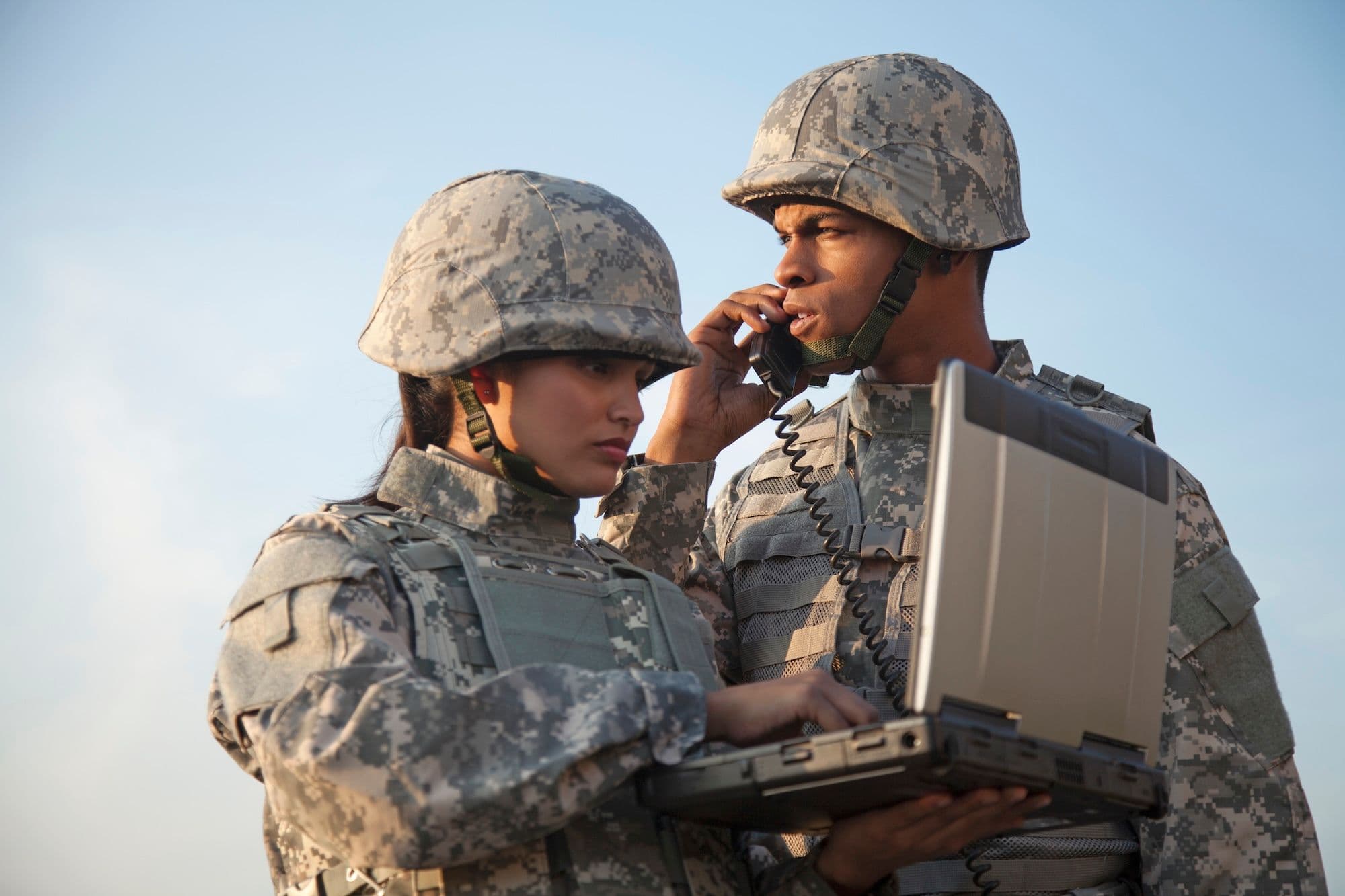
On a cold and windy day in March 1996, a group of 25 Marine Corps second lieutenants, accompanied by their instructors, participated in a communications field exercise at Fort A.P. Hill, Virginia. The objective was to provide training on installing, operating, and maintaining a tactical communications architecture while continuously relocating. The terrain at Fort A.P. Hill is notably hilly and densely vegetated, which posed significant challenges for movement and the establishment of new communication nodes.
At that time, the Marine Corps primarily relied on single-channel radios (SCRs) at the small-unit level for command and control. SCRs enabled orders to be communicated to subordinate commanders and allowed for the receipt of situational updates, assisting commanders in making informed decisions. The responsibility of the second lieutenant communications officer was to develop and implement a resilient command-and-control plan to support timely decision-making for the commander.
To enhance training under realistic conditions, instructors frequently introduced additional complexity and chaos. For example, they would require relocation immediately after successful radio link establishment or simulate equipment failures by declaring primary radio links inoperable and prompting officers to respond to these evolving situations.
The enduring lesson: always have more than one way to communicate
Reflecting on the lessons learned during the Marine Corps training exercise, I recognized the enduring value of having multiple communication methods to maintain effective command and control. As new technologies were introduced, the core principle persisted: always develop several options to ensure communication can continue if disrupted by adversarial action, environmental factors, or unforeseen circumstances.
This need for resiliency led to the implementation of the PACE plan—Primary, Alternate, Contingency, and Emergency—an approach I relied on numerous times during my Marine Corps career. The importance of this approach was reinforced in September 2025 at the Billington Cybersecurity Summit, when General Caine, chairman of the Joint Chiefs of Staff, emphasized resiliency with the reminder that “one of one thing will tend to break.” His words echoed my Marine Corps experience and the adage, “two is one, and one is none,” underscoring that the PACE plan is vital for ensuring essential capabilities remain operational.
The PACE plan concept is adaptable to various situations. For instance, most U.S. Navy ships store potable water in tanks and distribute it through a dedicated system. These ships are also equipped with methods to produce potable water using reverse osmosis and/or evaporative distillation. This approach mirrors the PACE plan philosophy—multiple capabilities prevent system failures and maintain resiliency when disruptions occur.
A PACE plan is essential when organizations—such as enterprises, government agencies, or military services—depend on a single vendor for key functions like OS patching, software updates, vulnerability management, and cybersecurity. If this ecosystem fails, the consequences can be severe.
For military organizations, lacking a feasible, acceptable, and suitable PACE plan could mean catastrophic losses of critical capabilities. Military services require these resilient capabilities to ensure mission success; they need to be operational all the time—not in a standby mode—to maintain operational tempo.
A modern PACE plan: why Tanium matters for cyber resilience
In cybersecurity operations, PACE is central to maintaining defense in depth and enterprise resiliency. Tanium strengthens this cyber resilience through three core capabilities:
- Real-time endpoint intelligence
Tanium collects data directly from the endpoint, providing the accuracy and immediacy required during high-pressure events such as ransomware outbreaks. When seconds matter, Tanium can instantly identify compromised endpoints, isolate affected systems, and empower teams with continuous visibility to help drive actionable insights.
- Large-scale, high-speed response
Many cybersecurity tools can fail to scale in environments with hundreds of thousands of endpoints. Software deployments stall, updates miss devices, and data becomes stale. Tanium distributes updates and gathers telemetry at speed—even in complex, large-scale distributed networks—helping ensure swift remediation so no system is left vulnerable. - Oversight of other security tools
Organizations relying on a single vendor often lack visibility into when those tools silently fail. The Tanium Autonomous IT Platform fills this gap by continuously assessing the health of other cybersecurity solutions, identifying failed agents or outdated components, and quickly remediating issues. If an endpoint protection tool stops reporting across a department, Tanium can diagnose, update, and restore coverage—ensuring resilience by design.
The bottom line: resilience requires a PACE plan—and the right technology
Resiliency and technology-in-depth strategies are essential for maintaining critical capabilities during enterprise outages and ensuring accurate oversight during routine operations. As stated above, the PACE plan—Primary, Alternate, Contingency, and Emergency—provides a foundational framework for continuous operations when systems fail.
Tanium stands out as a key solution by providing real-time endpoint intelligence, rapid large-scale response, and robust oversight of other security tools, which collectively strengthen cybersecurity resilience.
Organizations, especially in the military, government, and critical infrastructure sectors, cannot afford single points of failure. A resilient ecosystem requires layered capabilities, verified readiness, and continuous visibility. These organizations must implement a PACE plan that leverages advanced technologies like Tanium to ensure essential networks maintain a high level of readiness when other tools fail.
Because in cybersecurity—as in the field—two is one and one is none.