When an AI model finds a critical vulnerability in a codebase that has been reviewed by human eyes for 27 years, on the very first pass, the rules of enterprise security change. That is exactly what Mythos, the latest model from Anthropic, has demonstrated.
Mythos is capable of scanning code from both internal and external perspectives simultaneously, spawning multiple agent trials that can do the work in parallel without stopping, and surfacing vulnerabilities that years of traditional scanning and human review had not detected. Unlike a traditional AI model that responds to a single prompt, Mythos operates as an AI agent—it sets its own subtasks, runs parallel trials, and continues working autonomously until it finds what it's looking for.
For security teams, the implications are immediate: the window between vulnerability discovery and active exploitation is collapsing, and tools that attackers could use to find those vulnerabilities are already emerging.
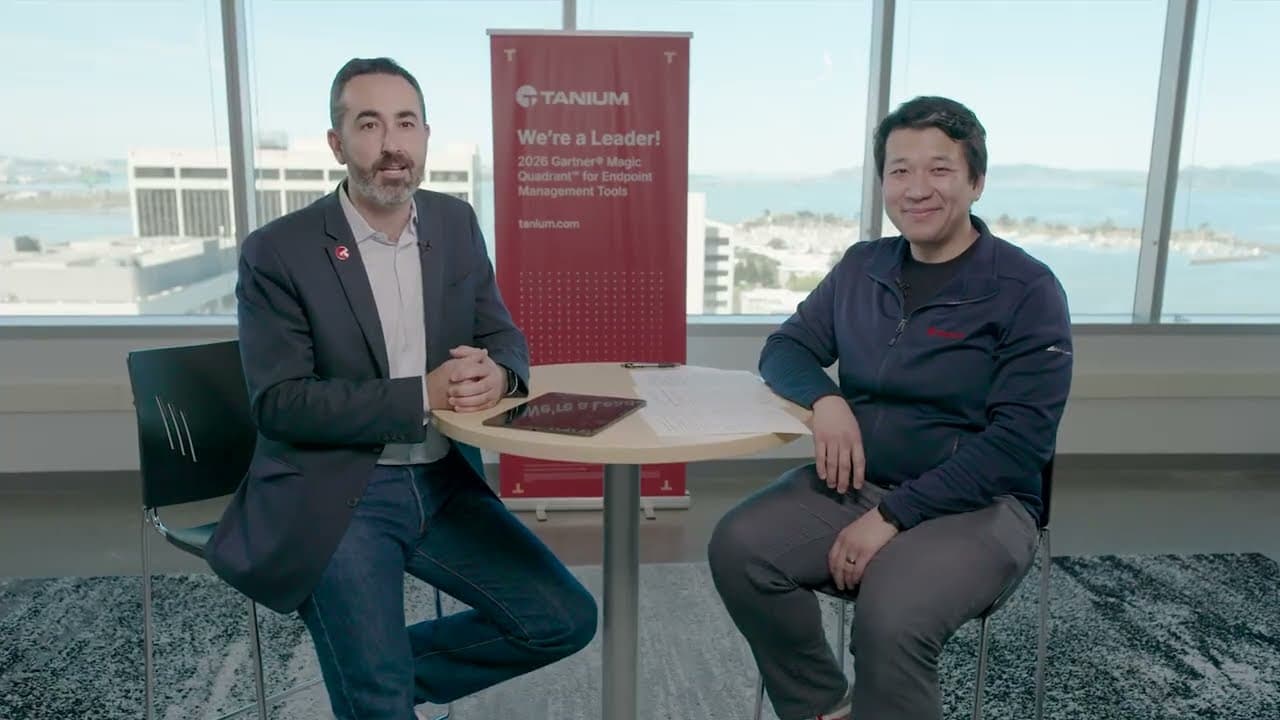
Mark walks through what Mythos is, what it has already found, and why the timing of its disclosure matters as much as the vulnerabilities themselves. He explains a layered approach to endpoint security, from continuous asset inventory and real-time asset intelligence through to Autonomous IT remediation, and describes how each layer addresses a specific gap that makes organizations vulnerable in a post-Mythos world. He also addresses the hard question of whether traditional patch windows, even 72-hour SLAs, are still acceptable given how quickly this threat landscape is shifting.
If your organization is still operating on manual patch cycles, working from an out-of-date CMDB, or uncertain about which assets represent your most critical exposure, this conversation will reframe the urgency of those gaps in concrete terms. Mark also shares real deployment benchmarks from Tanium customers, including how quickly full-scale endpoint coverage can be achieved, that make the path forward more tangible than most security conversations allow. Watch the full video below.
Curious where your greatest exposure lies in a post-Mythos world? Reach out to Tanium to explore how your current security posture holds up against machine-speed threats—and where Tanium can help close the gaps.
Key takeaways
- Mythos finds what humans missed: Mythos is the latest model from Anthropic and is able to find vulnerabilities very quickly, including a critical vulnerability in the OpenBSD codebase that went undetected for 27 years despite extensive human review, and a vulnerability in FFmpeg that had been scanned and tested over 5 million times without detection.
- Both sides can use it: As a tool for defenders, Mythos identifies where castle walls are broken, but the same tool is now going to be available to attackers, who can very quickly understand where they can get into a corporation and reach its crown jewels.
“Mythos, like I said earlier, is hyper intelligent. It's able to look at the problem from both the internal side and external side. And because of how it's effectively spawned many, many different agent trials that can do the work, it can look at everything all at once the whole time, and it doesn't sleep.”Tanium Sr. Director of Solution Engineering Mark Liu
- A responsible but finite window: Anthropic has kept the Mythos project tight through a private preview called Project Glasswing as part of what amounts to a pre-IPO security disclosure, and the majority of vulnerabilities discovered have been disclosed to affected companies, but a disclosure timeline means these vulnerabilities will become public within 30, 60, or 90 days regardless of whether vendors have addressed them.
“We are so fortunate that this landed in the good guys' hands right now, right? Imagine if this was discovered by nation-state attackers, APTs out there. I mean, we would already be suffering the consequences.”Tanium Sr. Director of Solution Engineering Mark Liu
- Nation-state actors are racing to catch up: The fact that Mythos has been discovered by someone here in the US means that the development of systems like Mythos is likely to increase confidence among threat actors and accelerate comparable AI efforts in other parts of the world.
- Human-speed remediation is already too slow: Traditional workflows, including scanning, reporting, ticket creation, and human review, operating on 72-hour or 30-day patch windows may be too slow for some post-Mythos scenarios. Remediation must happen at machine speed.
- Asset visibility remains an unsolved problem: Many organizations still cannot rely on their CMDB. It's out of date and cannot provide the real-time asset visibility that a Mythos-era threat environment demands. A strong first layer of response is continuous asset inventory and discovery, including visibility into shadow IT, shadow AI, and unmanaged endpoints.
- Three layers of endpoint readiness: Mark outlines a layered approach: Layer 1 (asset inventory and visibility), Layer 2 (asset intelligence, including understanding criticality and exposure), and Layer 3 (Autonomous IT, compressing time to remediation through continuous scanning, autonomous prioritization, and ring deployments with confidence scoring).
- Tanium deploys at enterprise scale, fast: Tanium has supported large-scale deployments for customers, showing that, in some environments, broad coverage can be achieved without a multi-year implementation timeline.
“I think it's also very clear now that the question isn't about whether Mythos will change the threat landscape. The question really should be about whether it already has.”Tanium Sr. Director of Solution Engineering Mark Liu
Additional resources
- Automate mission-critical IT workflows with low-code playbooks and real-time orchestration: Learn how Tanium Automate enables IT and security teams to create multi-step, condition-based playbooks that automate repeatable tasks, execute changes across your endpoint environment using real-time data, and keep operators in control with complete visibility into playbook status and run history.
- How AI is changing the cybersecurity landscape—and what IT teams need to know: A guide examining the role of AI in cybersecurity, covering both offensive and defensive implications for IT and security leaders navigating an AI-accelerated threat environment.
- Creating and managing automated IT playbooks in Tanium Automate: Technical documentation covering how to build multi-step, condition-based playbooks, configure real-time monitoring of playbook execution, and manage playbook run history and governance controls in Tanium Automate.
- Deploying continuous asset discovery and CMDB integration with Tanium Asset: Documentation for configuring Tanium Asset to maintain real-time endpoint visibility, discover unmanaged devices including shadow IT, and feed accurate, up-to-date asset data into CMDB platforms such as ServiceNow.